 By: Amjad Aziz Malik
Administrator China Window Peshawar
Pakistan-China friendship is not merely the name of diplomatic relations between two countries; rather, it is a story of trust, respect, sacrifice, resilience, and a shared future, the likes of which are rarely found in international relations. Spanning more than seven decades, this relationship has continued to grow stronger despite every changing international situation, regional crisis, economic challenge, and global pressure. This is why Pakistan-China friendship is rightly described as higher than the Himalayas, deeper than the oceans, sweeter than honey, and stronger than steel. Prime Minister Muhammad Shehbaz Sharif’s recent visit to China marked a new and important chapter in this everlasting friendship. The visit took place at a time when the world was passing through rapidly changing geopolitical and economic circumstances. New centers of power were emerging at the global level, peace and stability in the region were facing new challenges, the situation in the Middle East had affected the global economy and energy system, while the need for development, connectivity, and peace in South Asia had become greater than ever before. In such an environment, Prime Minister Shehbaz Sharif’s visit to China was not only a reflection of the strength of bilateral relations but also a clear expression of the shared commitment of Pakistan and China to peace, development, and common prosperity in the region.
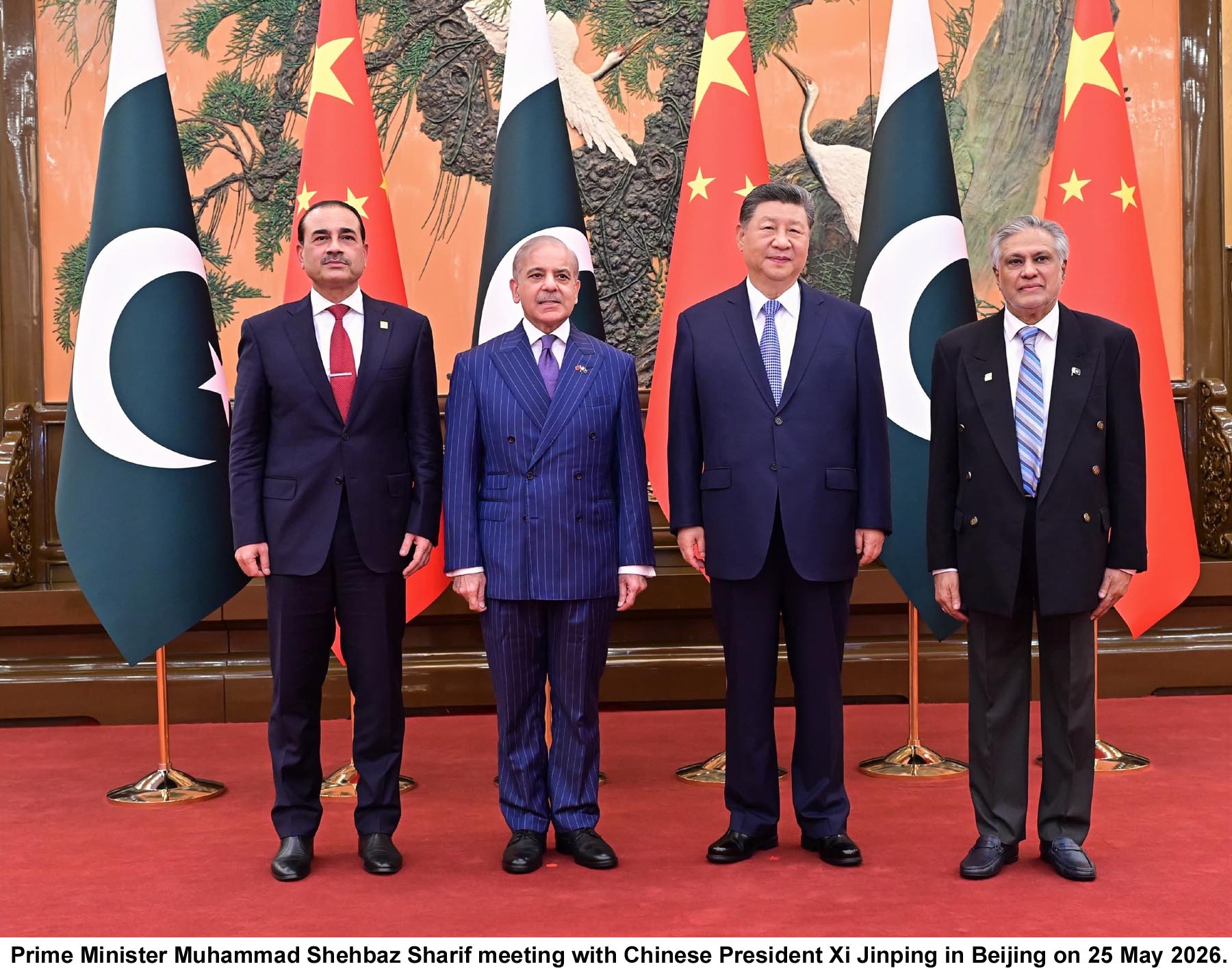
Prime Minister Shehbaz Sharif’s meeting with Chinese President Xi Jinping was warm, cordial, and purposeful. President Xi Jinping described Pakistan-China relations as an unbreakable and time-tested friendship, emphasizing that China attaches special importance to its relations with Pakistan in its foreign policy. He called Pakistan China’s trusted friend, strategic partner, and all-weather companion. Prime Minister Shehbaz Sharif, on the occasion, made it clear that Pakistan and China are iron brothers and that the friendship between the two countries is deeply rooted in the hearts of their peoples from generation to generation.
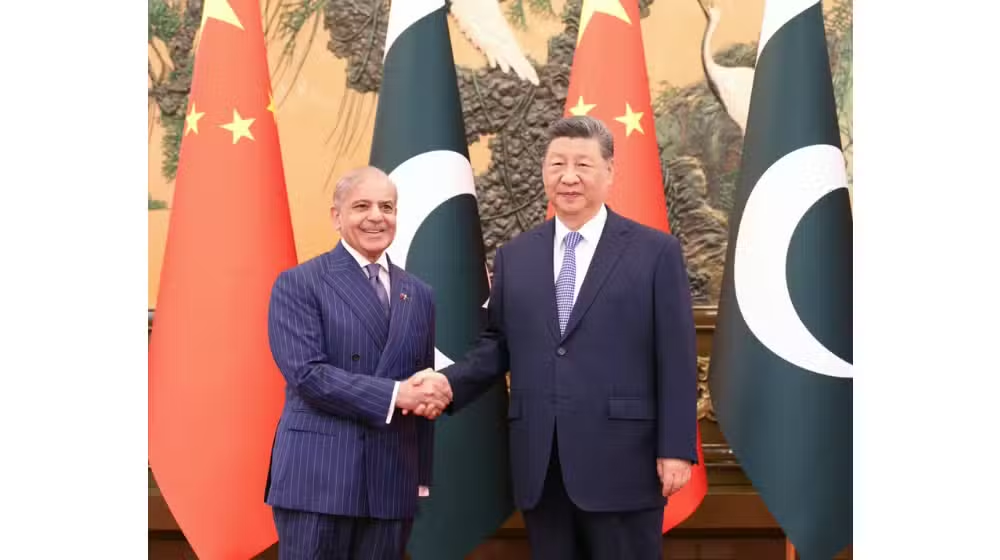 During the meeting with President Xi Jinping, the two leaders agreed to further deepen the Pakistan-China All-Weather Strategic Cooperative Partnership, take CPEC into a new phase, promote industrial cooperation, and expand collaboration in agriculture, science and technology, artificial intelligence, education, energy, infrastructure, trade, and people-to-people exchanges. This meeting was particularly important because it did not merely reaffirm traditional friendship; it also identified new areas of practical cooperation in line with future needs.
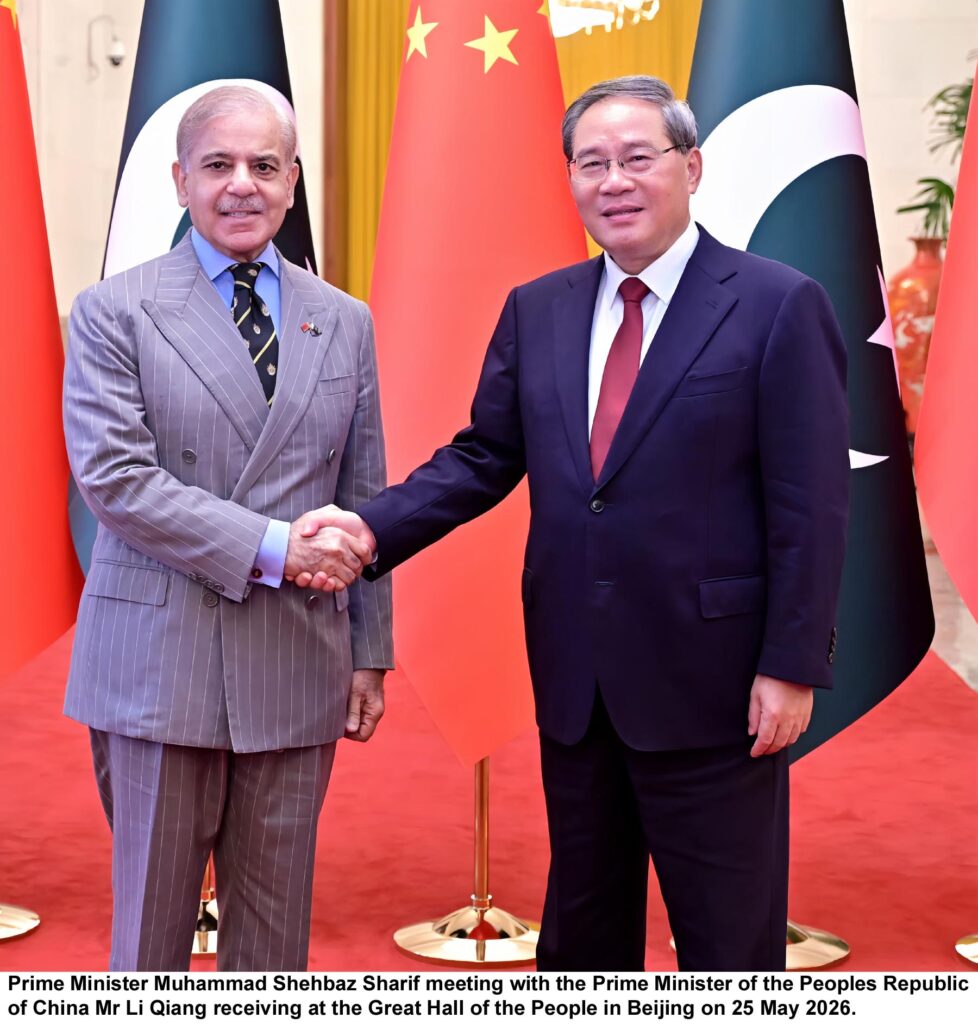
Prime Minister Shehbaz Sharif’s meeting with Chinese Premier Li Qiang also proved to be an important source of practical progress in bilateral relations. During delegation-level talks, detailed discussions were held on CPEC’s second phase, Chinese investment in Pakistan, special economic zones, industrial relocation, agricultural modernization, export growth, business linkages, energy, information technology, electric vehicle infrastructure, pharmaceutical technology, and green development. Both prime ministers expressed their determination that Pakistan-China economic cooperation would not remain confined only to government projects, but that the private sector, business community, youth, experts, investors, and educational institutions would also be made active partners in this collaboration.
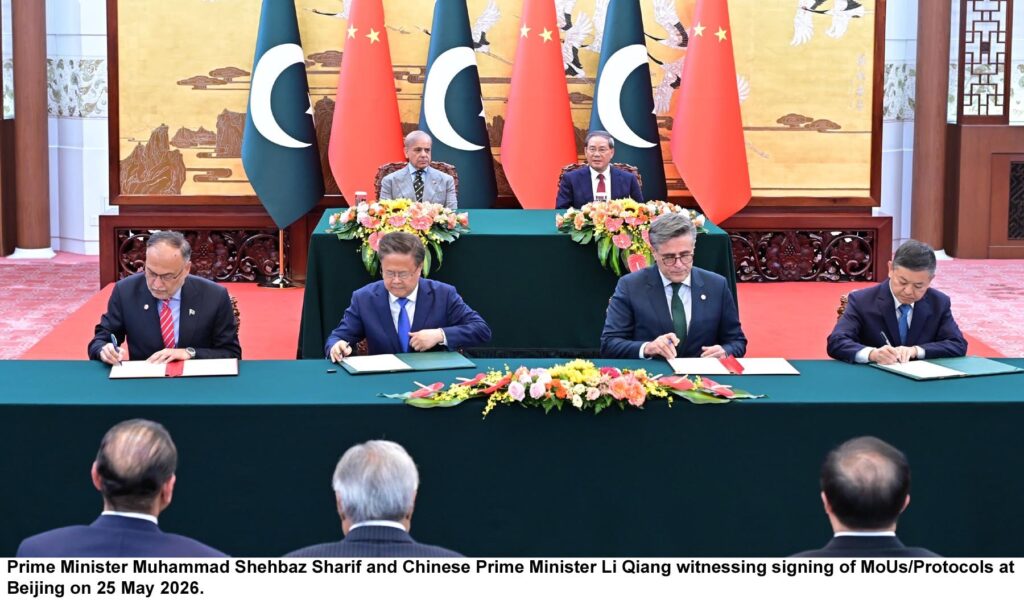 The signing of various agreements and memorandums of understanding during the visit also reflected a new practical phase in Pakistan-China relations. Through these MoUs, the way was paved to move forward in agriculture, climate change, renewable energy, information technology, electric vehicle infrastructure, pharmaceuticals, industrial cooperation, business partnership, and different aspects of CPEC Phase Two. These agreements are proof that Pakistan and China are now transforming their friendship beyond traditional diplomacy into modern economy, technology, employment, investment, and public prosperity.
CPEC is the most prominent and practical manifestation of Pakistan-China friendship. In its first phase, CPEC brought historic changes to Pakistan in energy, roads, infrastructure, and connectivity. Now the second phase of CPEC can open a new door for Pakistan in industrial development, export growth, agricultural modernization, technology transfer, employment opportunities, special economic zones, environment-friendly development, and regional connectivity. Prime Minister Shehbaz Sharif’s visit to China gave this new phase a clear direction.
During the visit, special attention was also paid to the development of Gwadar and its advancement as a hub of regional connectivity. Gwadar is not merely a port; it can become an important economic bridge between Pakistan, China, Central Asia, the Middle East, and global trade. If Gwadar is made fully functional, secure, modern, and business-friendly, it has the potential to change not only the economic destiny of Balochistan but of the entire country. China’s interest in Gwadar, Khunjerab, the Karakoram Highway, and regional linkages is proof that Beijing sees Pakistan as a central partner in the region’s economic development.
An important aspect of Prime Minister Shehbaz Sharif’s visit was that both countries expressed a shared vision for peace, stability, and security in the region. At present, the situation in the Middle East, the Gulf, Afghanistan, and South Asia is highly significant for global peace. Pakistan has recently played a serious and positive role in reducing tensions between the United States, Iran, and other countries of the region. China also appreciated Pakistan’s efforts and regarded its role in regional peace as important. It is highly meaningful that both Pakistan and China prefer dialogue over war, cooperation over confrontation, and political solutions over the use of force.
President Xi Jinping appreciated Pakistan’s efforts for regional peace and acknowledged the fact that Pakistan was playing the role of a responsible country for peace and stability in the region. Prime Minister Shehbaz Sharif also assured the Chinese leadership that Pakistan would continue to play its role for peace in the region, energy security, protection of maritime routes, and stability of the global economy. In this context, the common position of Pakistan and China is a clear message to the world that sustainable peace is possible only through dialogue, justice, mutual respect, and the principles of common security.
The aspect of defense and security cooperation also remained of extraordinary importance during this visit. Pakistan assured China that the protection of Chinese citizens, experts, engineers, investors, and CPEC projects in Pakistan is among the foremost priorities of the Government of Pakistan. Pakistan understands that the security of Chinese nationals and projects is not merely an administrative matter, but is directly linked with Pakistan-China friendship, investment confidence, and the future of CPEC. Therefore, the Government of Pakistan reaffirmed its commitment that all possible measures would be taken for the protection of Chinese citizens and projects.
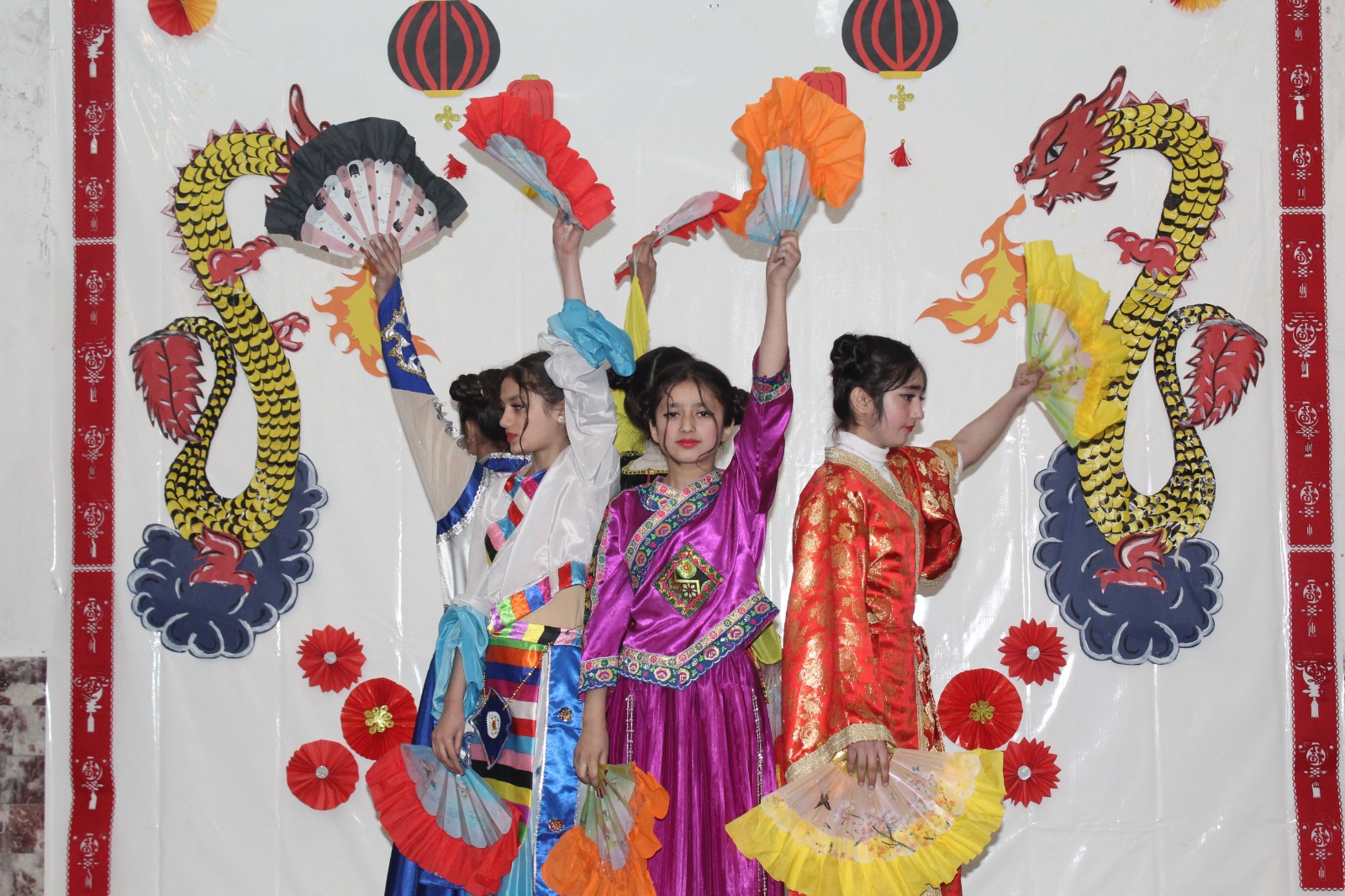
The beauty of Pakistan-China relations is that they have not remained confined to governments alone, but have also continued to grow through people-to-people relations. Educational exchanges, cultural programs, language learning opportunities, youth visits, media cooperation, sports, tourism, and public contacts are further strengthening this friendship. China can create new opportunities for Pakistan’s youth in knowledge, technology, research, language, skills, and employment, while Pakistan remains for China a friend that can be trusted in every difficult time.
On the occasion of the 75th anniversary of Pakistan-China friendship, Prime Minister Shehbaz Sharif’s visit to China was an important development both symbolically and practically. Symbolically, the visit expressed that both countries want to transfer their historic friendship to future generations. Practically, it proved that Pakistan and China want to enter a new economic era through investment, industry, technology, agriculture, energy, trade, and regional connectivity.
It also cannot be ignored that Pakistan currently needs economic stability, increased exports, industrial development, employment, modern technology, sustainable energy sources, and foreign investment. China can prove to be Pakistan’s most reliable partner in all these fields. However, for this, Pakistan must also ensure serious domestic reforms, policy continuity, facilitation for investors, removal of bureaucratic hurdles, security guarantees, activation of special economic zones, and timely implementation of projects.
Prime Minister Shehbaz Sharif highlighted the potential of Pakistan’s economy in China and invited Chinese investors to invest in Pakistan’s agriculture, mining, industry, IT, energy, electric vehicles, textiles, pharmaceuticals, infrastructure, and export-oriented industries. If the understandings reached during this visit are implemented swiftly, not only can industrial activity increase in Pakistan, but employment opportunities can also be created for millions of young people.
China’s model is also important for Pakistan because China has achieved extraordinary success in poverty alleviation, industrial development, technology, education, research, infrastructure, and global trade within a few decades. If Pakistan benefits from China’s experience, ensures policy continuity, invests in human resources, promotes technical education, activates industrial zones, and focuses on exports, CPEC Phase Two can become a strong source of Pakistan’s economic revival.
This visit once again proved that Pakistan-China relations are not based on temporary interests but on deep strategic trust. Alliances in the world keep changing, the colors of global politics keep shifting, and economic pressures and diplomatic challenges continue to arise, but Pakistan-China friendship has emerged successful in every test. This is why both countries have always stood by each other on their core interests. Pakistan has fully supported the One-China Policy, while China has always supported Pakistan’s sovereignty, security, development, and economic stability.
After Prime Minister Shehbaz Sharif’s visit to China, the real test is implementation. Agreements and MoUs become meaningful only when they are transformed into projects, investment, employment, production, exports, and public prosperity. Pakistan should establish an effective mechanism to monitor the understandings reached during this visit, set clear timelines for every project, assign responsibilities to the relevant ministries and provinces, and resolve the issues of Chinese investors immediately. Similarly, business linkages with China must not be limited to Islamabad and Beijing, but should be extended to provinces, cities, industrial institutions, universities, chambers of commerce, and young entrepreneurs.
 Khyber Pakhtunkhwa, Balochistan, Sindh, Punjab, Gilgit-Baltistan, and Azad Kashmir can all benefit from CPEC and Pakistan-China cooperation. For Khyber Pakhtunkhwa, there are countless opportunities under CPEC in industrial cooperation, tourism, minerals, hydropower, agriculture, technical education, and cultural linkages. If practical cooperation with China is advanced at the provincial level, new possibilities for development can be created in Peshawar, Rashakai, Mardan, Swat, Chitral, Haripur, Abbottabad, and other areas. Strengthening Pakistan-China friendship at the provincial and public levels, along with the national level, is the need of the hour.
An important aspect of Pakistan-China relations is cultural harmony. When people understand each other’s language, culture, history, civilization, traditions, and development journey, friendship becomes stronger, more durable, and more public-oriented. Understanding China’s development, learning the Chinese language, student exchanges, cultural festivals, media delegations, sports, tourism, and public contacts can further strengthen the social foundation of this friendship. This is the foundation that prevents relations from weakening despite changes in governments.
Prime Minister Shehbaz Sharif’s visit to China was highly successful and timely in the sense that it once again united both countries on the agenda of a shared future, shared development, and shared peace. Meetings with President Xi Jinping, Premier Li Qiang, and other Chinese leaders made it clear that China sees Pakistan not only as a friend but also as an important strategic partner. Similarly, Pakistan gives China a central place in its foreign policy, economic development, regional connectivity, and efforts for global peace.
Today, when the world is facing division, confrontation, economic uncertainty, and regional crises, Pakistan-China friendship gives a message of hope, trust, and cooperation. This friendship is not merely a memory of the past; it is also a need of the future. This friendship requires both countries to bring their peoples closer, provide opportunities to their youth, accelerate CPEC, turn investment into reality, raise a common voice for peace, and make development a reality felt in the lives of the people.
Prime Minister Shehbaz Sharif’s visit to China was an important milestone in this journey. What is now needed is to turn the meetings, memorandums of understanding, and joint announcements made during this visit into practical steps. If Pakistan benefits from this opportunity with seriousness, continuity, and speed, the new era of Pakistan-China friendship can become not only a diplomatic success but also a source of economic prosperity, industrial development, regional peace, and public welfare.
Pakistan-China friendship was strong yesterday, is strong today, and will become even stronger tomorrow. This friendship is an asset of history, a need of the present, and a guarantee for the future. Prime Minister Shehbaz Sharif’s visit to China is a shining proof that both countries are determined to take their relations to new heights, and this determination can mark the beginning of a new chapter of peace, development, and prosperity in the region.